Pin It

Monday, July 19, 2010

A Visit from the Stork

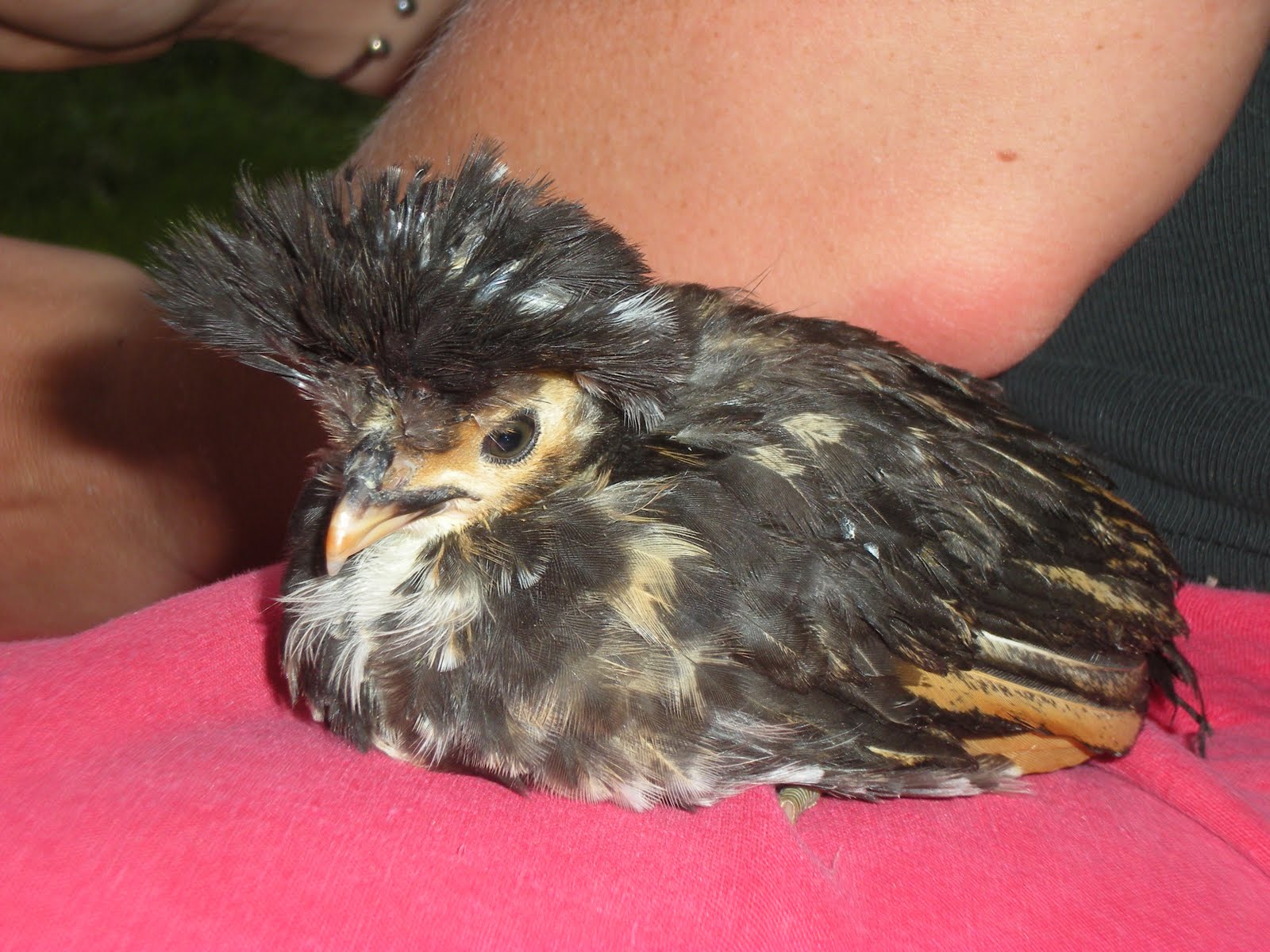
On July 8th, at 6:07 A.M., the phone woke Andy and me up. The post office called to tell us our baby chicks had arrived. Groggy, we quickly scrambled downstairs to get a new brooder filled with litter and ready for our day-old-chicks.


When the chicks arrived, I couldn't wait to rip open the box and see my new friends. Our kitties were interested in the chirping cardboard box. 


The waterer has a red plastic bottom, which is recommended because red is the color most easily identified by chicks. We also have a red brooder light; in this case, red is calming for the peepers. Since these chicks were one-day-old when they arrived, the brooder temperature needed to be 95 degrees. With each passing week, the temperature should be 5 degrees lower. Since it has been so hot here, we have not had to have the light on very often.  


One chattered her beak all day long. We finally realized she had never figured out how to drink. I dipped her beak in the waterer several more times, and eventually she got it!

Now the chicks are 1.5 weeks old. We have been playing with them indoors.

Next week, we will start taking them outdoors for some fresh air. We'll also begin handing out treats like meal worms and raisins. There have been no signs of roosterdom so far; here's hoping these are all hens!  We ordered them from My Pet Chicken this time in order to have  more assurance that we'd obtain only ladies this time. We're keeping our fingers crossed!

Any suggestions for names?  We are continuing our theme of musician names.

Friday, July 9, 2010

Naysayers Beware: Beets = Nutritional Goodness

Earlier in the week, we pulled our garden's first beets. Yesterday, we planted another row of them. Today, we juiced a few for a recovery drink after our 60-minute run. Beets are good to us.

Beets are one of those roots that many claim not to like. I (or rather we) challenge those naysayers to try new ways, other than the classic pickled beet, in order to consume this super food. These crimson roots contain loads of Vitamins A, B1, B2, B6, and C. They can be juiced, roasted, broiled, put into a cake, pickled, grilled, blended to be added to a vinaigrette, or shredded and eaten raw. And all methods equal pink, magenta, or crimson pee for nearly everyone. When it happens, don't be alarmed; it's only natural! :)

Our beverage today is a spin-off of the Willy Street Co-op's Juice Bar's Beetnik. We juiced carrots, oranges, and beets.
Beets from our garden, oranges from our fruit CSA, and carrots from our veggie CSA
 Ready to be juiced
All done...
My own version of the Beetnik! So sweet, so yummy, so nutritious!

Thursday, July 8, 2010

Cold-Brewed Coffee: Ethical Heaven

Who wants to drink hot coffee in humid, sticky weather? Maybe some, but not me. On steamy days, I crave a nice big glass of iced coffee. Rather than spend $2 to $3 daily to feed my addiction, we've started cold brewing our own. Pour the silky liquid of deliciousness in a glass of ice; add a splash of cream; and oh-my-goodness: sipping heaven on my front porch! Try it. :)

How?
1. Coarsely grind coffee beans.
2. Use ratio of 1 cup coffee grounds: 4.5 cups water.
3. Combine and stir. 
4. Leave sit 12 hours or overnight at room temperature.

5. Strain using a colander lined with paper towel or a regular coffee filter.
Cold-brewed coffee has been called iced crack by some. Unless you want crazy jitters all day, be sure to fill your glass with ice to help dilute the coffee a bit. General rule of thumb is equal portions of cold-brewed coffee to water (ice in most cases).

Why choose cold-brewed coffee?
  • You get your caffeine fix in the summer without staining your clothes with sweat.
  • Cold-brewed coffee is less acidic than hot coffee, so it's easier on your stomach.
  • It keeps for up to two weeks in the fridge.
  • It freezes well too. Lots of people freeze leftovers into ice-cube trays for more coffee goodness added to their cold coffee drinks.
We typically use Kickapoo Coffee because we are fortunate enough to have that coffee offered as a CSA through Harmony Valley Farm. It's delicious, organic, and most importantly, fair trade. When and if we run out of our coffee for the week, our priority in purchasing is to buy fair trade. Why you might ask?

A few reasons include:
1. Smaller farmers are generally better stewards of the land.
2. Buying fair trade ensures that fair wages are being paid to people who harvest and grow your drink/food.
3. Fair trade requires sustainable agriculture methods, so generally, fair trade products are better for the environment.
Click here and here to learn more.  And look for these symbols when purchasing coffee!


Wednesday, July 7, 2010

Tantalizing Tastes and Smells: The First Major Harvest

Our gardens are flourishing, and last night marked the first major food preservation event of the season.

The herb garden smells tantalizing and is growing beyond expectations . Our basil plants were ready for a good cleaning, and our summer savory was beautifully out-of-control.  Chamomile was definitely gorgeous, but also in need of a good harvesting as well. I harvested basil, spearmint, chamomile, and summer savory. My hands smelled like a Sicilian countryside (at least in my imagination).  On a non-food note, our butterfly weed is an eye-catcher. Butterflies are rapidly increasing in our yard!

Chamomile 
Basil Plants
Butterfly Weed and Caterpillar

Our first three pints of pesto are in the freezer. The same basic recipe was used as last year, but this time we also added in some green carrot tops in conjunction with the basil and used walnuts in place of pine nuts.

 Pesto...pizza anyone?

Our dehydrator wasn't working due to the humidity, so we oven-dried (yes, in this heat and stickiness!) a pint of chamomile and 2/3 pint of spearmint. Today, we're drying several batches of summer savory.
Summer Savory waiting for the oven
Chamomile and Spearmint - dehydrated and waiting to be brewed

We also pulled our first beets. The greens were blanched and are now chilling in the freezer. We plan to make Beetniks with this crimson bundle of goodness after tomorrow's 60-minute run.


 Finally, a raspberry-walnut vinaigrette is in the fridge waiting to dress fresh salads!  Our raspberries are producing well, though picking is such a continuous process as all raspberries are not ready at the same time. Jam is hard to do with just a few quarts, but vinaigrette is perfect for such an amount. Not much measuring was done for this process; it was a fly-by-the-seat-of-the-chef's-pants dressing, but it turned out fabulous. So, adapt this to your liking.

Raspberry-Walnut Vinaigrette
about 3 cups of raspberries
about 1/3 to 1/2 cup of walnuts
about 1/4 cup of balsamic vinegar
about 1/4 to 1/2 cup of olive oil
about 2-3 Tbs. of lemon juice
a couple teaspoons of Dijon mustard
about a teaspoon of honey (or other sweetener)
salt and pepper to taste
small clove of garlic

Put all ingredients except for the olive oil in the food processor. Process until well-blended. Slowly drizzle in olive oil until emulsified. Viola! It's done! Should keep in the fridge for quite some time. Always shake before using.

Monday, July 5, 2010

Newfound Chicken Knowledge

Becoming chicken people has been quite the adventure, and both of us have learned loads about backyard chicken-keeping. Because we were quite naive, much of our new knowledge probably is common sense to some folks, but to us two former city dwellers, nothing about chickens was common sense before having our own feathery peeps.

A few  morsels of new found knowledge include:
  • Chickens have sex. I honestly did not know that. I thought that somehow, some way, the roosters inserted something into the hatched egg that made a chick. Now that I know, I'm dreading the day that Zappa and Marley's hormones kick in. I'm worried about my little hen ladies. I'm finding the idea of our cute little peepers doin' the deed very disturbing. I hope I'm not home to witness the first few rounds. 
  • Chickens like cheese. With Carmen, the cat, being so obsessed with cheese that she can distinguish the word from "treat", and with the chickens' love for cheese, I wonder if any of our  CSA cheese share will be left for the humans. 
  • Chickens can start having eggs at a very young age. I've read that egg-laying can begin as early as 16 weeks old, though most start laying a bit later than that.
  • Chickens can fly quite well, at least our Bantams can. Zappa has flown halfway across our yard.
  • Chickens need to slowly be introduced to new flock members. Currently, we're teaching Zappa, our first rooster, that Andy is actually the alpha male in this yard. Zappa bullies and picks on all the newer chicks, hens and roosters alike.
  • If chickens eat onions or garlic, it will spoil their eggs.
  • Most chickens roost when they sleep.
  • Hawks really don't care if people are around. They see chickens, and they think lunch. A week ago, we had two land in our yard - we were not even 20 yards away.
  • Chickens, when played with regularly, are very affectionate. Today Zappa sat on my lap, soaking up compliments and chicken massage, for over thirty minutes.
Chickens make great pets! And hens lay eggs!! Everyone should have a backyard chicken!!

Here are some of our chicken moments:

Zappa and Ani coming out of the coop for the first time.
Ani is well...a chicken! She's scared of everything.

Ani and Zappa = natural pesticide.
Now, they are too big to let alone and free in the garden;
they also want to eat our plants. 
Marley (previously know as Fiona)
She is a he. Figuring that out was quite the drama!

Loud and boisterous Janis.
She's pretty sweet too.
Ella ~ she is, as Dave Matthews would say, a lovely lady.

Among our lessons this summer... it's hard to sex a chick, and therefore, we ended up with two roosters. We thought we'd keep them both, but later learned that the ratio for roosters:hens should be 1:5. We tried finding a sanctuary for little Marley, but in the end decided to build a smaller coop and run for Marley and his ladies. We also are expecting three (previously sexed) Easter Egger day-old chicks this week! Easter Eggers are cold-hardy hens with sweet dispositions. Plus, they are exceptional layers that lay colored eggs. Perfect for our nieces and friends' children at Easter time.

We are anxiously awaiting our new babies.

Sunday, July 4, 2010

Garden Updates


Our gardens are looking beautiful, and we're ready for our first major harvest. Tomorrow, we'll be pulling our first round of beets, kale, and possibly garlic.


We've been able to harvest herbs and lots of Swiss Chard so far.


Our tomato plants are flowering and producing.
Our potato plants are beautiful. I love the flowers on top, especially the blue potato ones.
The raised gardens, which were planted much later, are doing well too.
Our beans and corn are getting along nicely.
The melon plants are giving me high hopes too! There is nothing like a fresh slice of cantaloupe or a glass of watermelon juice (and maybe vodka!).

Thursday, July 1, 2010

Bonfire Revelation: We Need a Bat House

Tonight, we decided to have a campfire in our own backyard. Andy got some wood, and we raided the fridge to figure out what we'd grill.

I collected remnants of last week's CSA box in hopes of a yummy grilled veggie salad. I found zucchini, a few orange beets, a fennel bulb, and some broccoli. I decided to spice this up and then put some leftover marinara sauce over it. Yum!

If you've never made a grilled veggie salad, I highly recommend it! You will need a grill basket. Grilled vegetables are super delicious because grilling gets all the yummy veggie sugars cooking, so your vegetables end up tasting delectably sweet. A good cookbook to start grilling vegetarian style is The Vegetarian Grill: 200 Recipes for Inspired Flame-Kissed Meals, although once you get started with vegetarian grilling, you'll soon realize it's as easy as throwing vegetables on the grill with some olive oil, and later dressing it with a sauce or topping of your choice.

The bonfire was beautiful tonight, dinner was wonderful, and the sky was clear. We even saw a few deer frolicking in the wheat field behind our house. The only annoyance were the State Bird: Mosquitoes. We have them in excess this year due to the undulating night rain storms throughout the last few weeks. Guiltily, we sprayed on our OFF. It seems we've been going through a bottle a week lately, and quite honestly, I feel like crap about it. We've tried more natural methods such as citronella to prevent getting bit, but nothing makes being out in our yard bearable quite like OFF.

Luckily, we saw a few bats flitting around as well. We've decided to get a bat house. I've read that one bat can eat up to 1000 mosquitoes an hour. What a perfect solution. Now, we just need to figure out how to get this new project started. Do any of you have a bat house? Does anyone have some advice for bat house newbies?  We'd appreciate any thoughts, suggestion, or advice that you have for us.